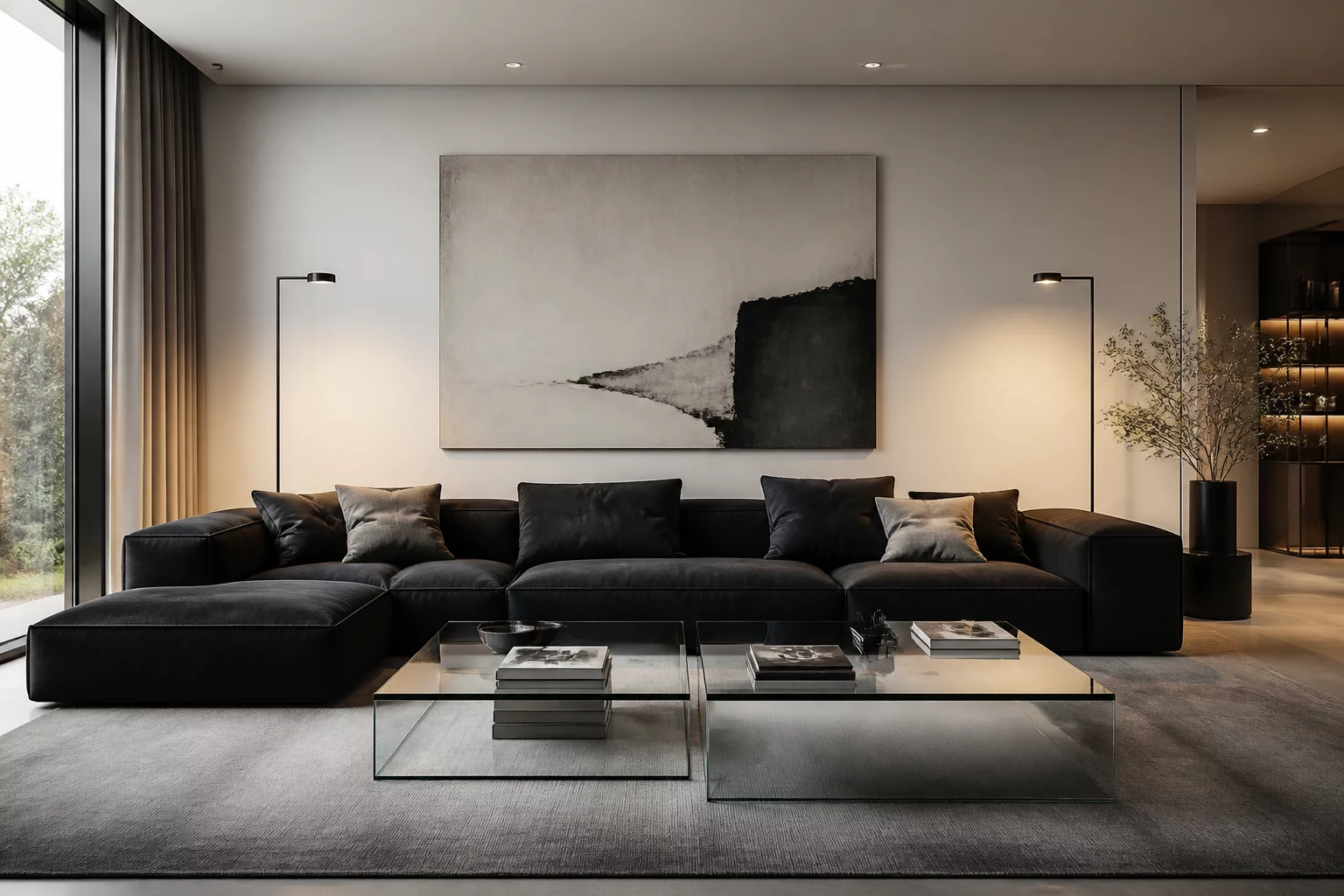
Visual weight refers to the perceived heaviness of an object in a space, a concept that sits at the intersection of physics and psychology. In residential planning, it determines whether a space feels balanced, chaotic, or anchored. This gravitational pull is not based on actual mass but on visual characteristics like color, texture, shape, and position. When we walk into a room, our brains subconsciously calculate the 'interest points' and assign them a weight. If this weight is unevenly distributed—for instance, if all the dark, bulky furniture is crammed into one corner—the room feels psychologically 'heavy' on that side, leading to a sense of unease.
The Primary Drivers of Perceived Mass
Color and value are perhaps the most potent contributors to this phenomenon. Darker, saturated tones like deep charcoal or navy carry significantly more weight than light pastels or whites. A black coffee table will always anchor a space more firmly than a clear glass one of identical dimensions. Texture also plays a role; rough, tactile surfaces like reclaimed wood or heavy wool knits draw the eye more aggressively than smooth, polished metal or satin finishes. This is why a small stone wall can feel more dominant than a large plain plaster one.
Techniques for Equilibrium
To create a harmonious layout, planners must distribute these heavy elements across the spatial axes. High-weight items like a large fireplace or a dark modular sofa require 'counterweights'—lighter elements placed strategically to guide the eye across the room. This could be a tall, slender floor lamp on the opposite side or a vibrant piece of art that pulls the gaze upward. Shape and orientation also influence the scale; irregular shapes feel heavier than perfect circles, while items placed near the edges of a room often carry more weight than those in the center. Mastering visual weight allows us to manipulate how big a room feels, how cozy it remains, and how movement flows through it without physical obstruction.
This could be your first analytical feedback. Join the discussion below to share your spatial logic.