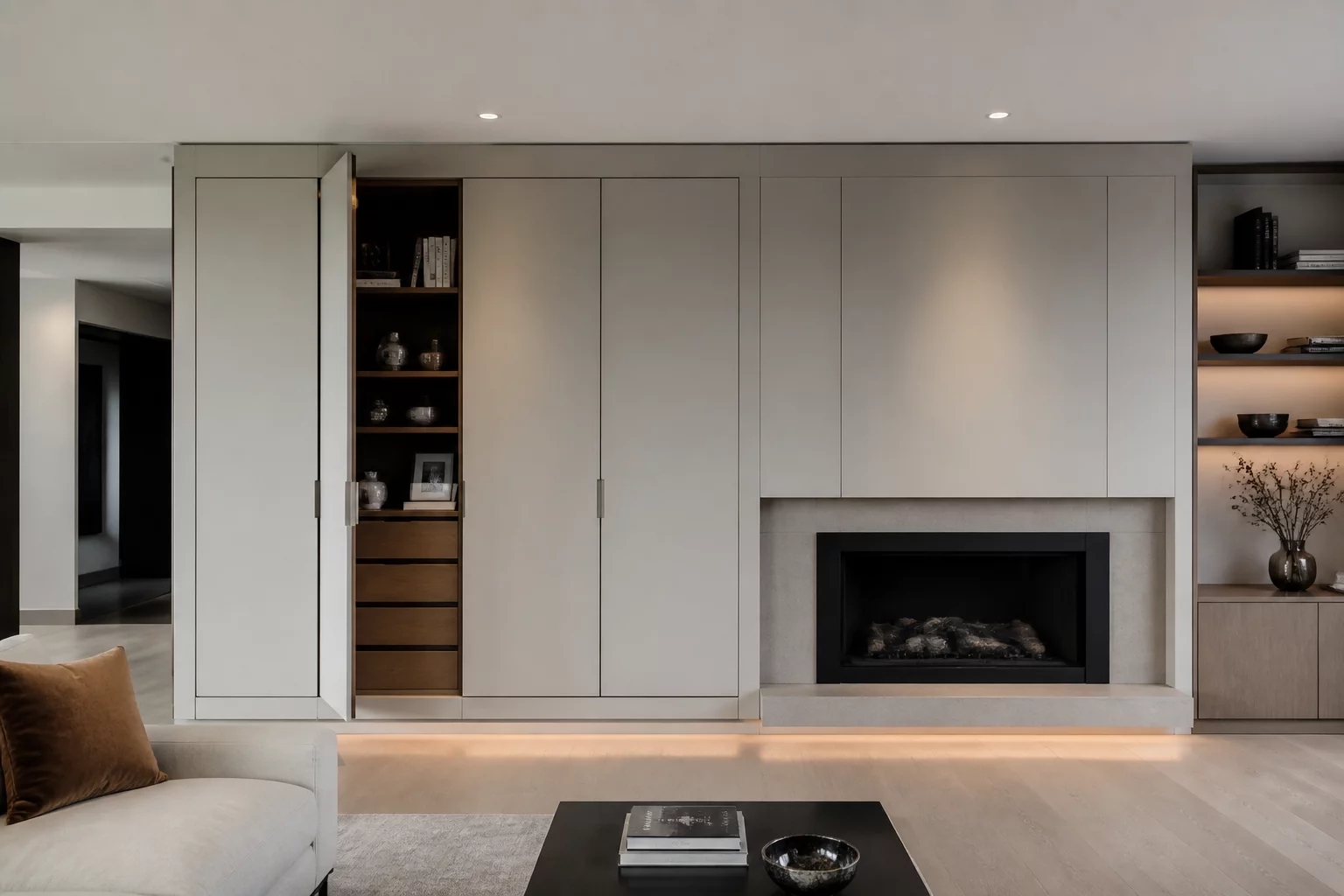
Clutter is far more than an aesthetic nuisance; it represents a persistent cognitive burden that directly affects our mental well-being. From a psychological perspective, every object left in the open is a visual cue that demands neural processing. When our field of vision is saturated with disorganized items, the brain's prefrontal cortex is forced into a state of high alert, constantly filtering out irrelevant stimuli. This hidden effort leads to increased cortisol levels and what researchers call 'environmental stress.'
Successful clutter management in residential planning starts with a structural acknowledgment of human behavior. Most clutter is not a result of laziness but of 'spatial failure'—the absence of a logical, immediate location for daily objects. By designing integrated storage that aligns with the architectural lines of the home, we can move from 'surface tidying' to 'visual silence.' Strategically placed floor-to-ceiling cabinetry and hidden landing zones allow the brain to stop processing the objects and instead experience the volume of the space itself, promoting deeper relaxation and focus.
No analytical feedback yet. Be the first to share your spatial logic on this layout decision.