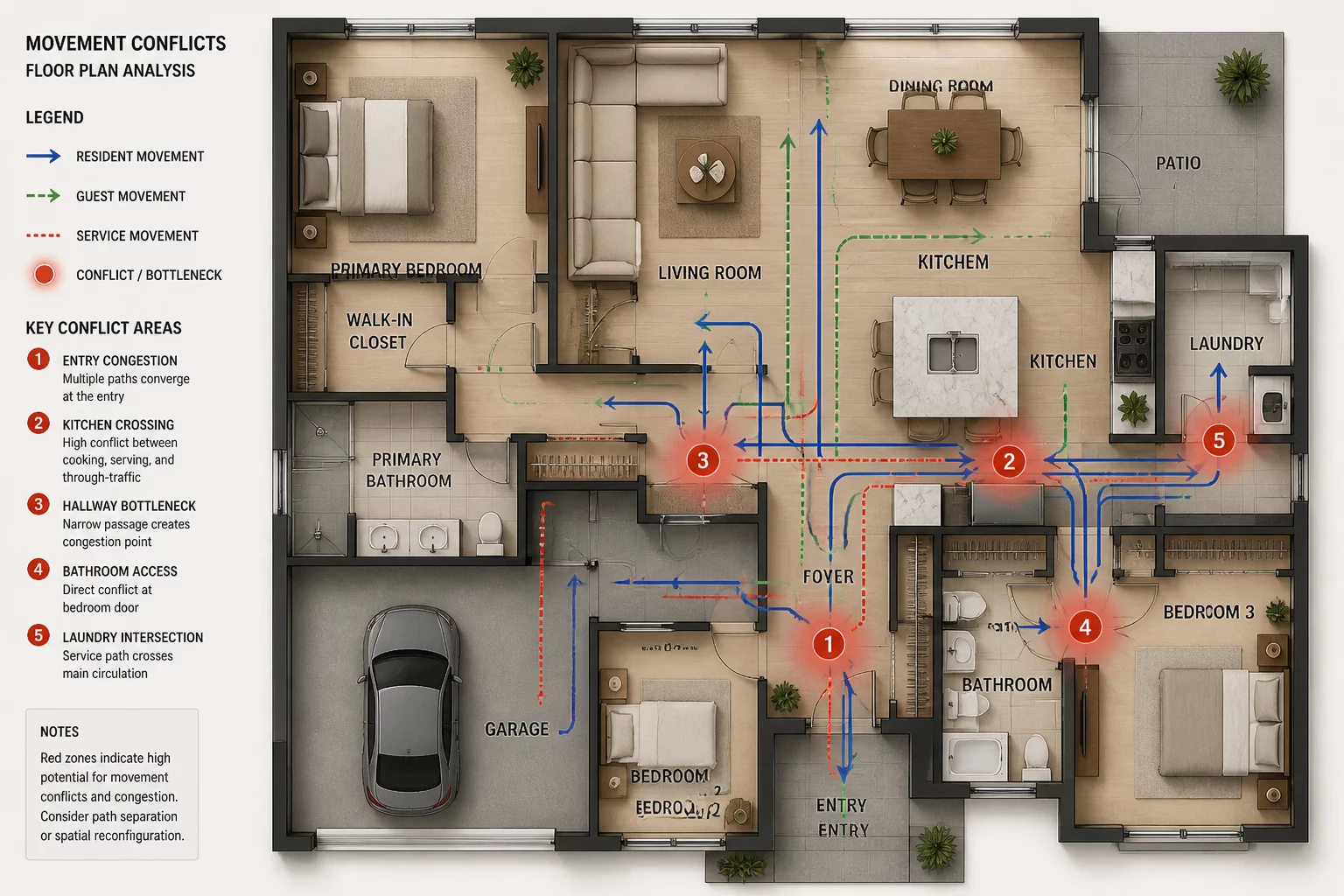
A movement conflict occurs when the primary traffic path through a home intersects with a functional zone, such as a seating area or a kitchen work triangle. These spatial collisions create subconscious stress and physical annoyance, often forcing residents to wait for others to pass or endure constant interruptions in their daily activities. It is not simply a matter of a few steps; it is about the structural integrity of a room's purpose.
The Hidden Cost of Open Circulation
Modern open-plan layouts often suffer the most from movement conflicts. Without defined corridors, residents tend to take the diagonal, cutting through the living room rug or passing directly between the sofa and the television. This behavior turns a place designed for rest into a busy thoroughfare, making it difficult for one person to relax while another is simply moving through the house.
Identifying Bottlenecks
In smaller apartments, the conflict usually centers around doors and tight passages. A bathroom door opening outward into a narrow hallway can block access to the bedroom, creating a temporary but frustrating logjam. These bottlenecks are often overlooked during the initial rendering phase, only becoming apparent once the furniture is in place and the household routine begins.
The Psychology of Flow
From a psychological perspective, being interrupted while moving towards a goal—even something as simple as getting a glass of water—triggers a minor stress response. When these conflicts happen ten times a day, the home environment begins to feel chaotic rather than supportive. Proper zoning separates travel paths from activity zones, allowing for a harmonious coexistence of movement and stillness.
Grace
Analyzer • 2026-06-10
Heidi
Analyzer • 2026-06-12