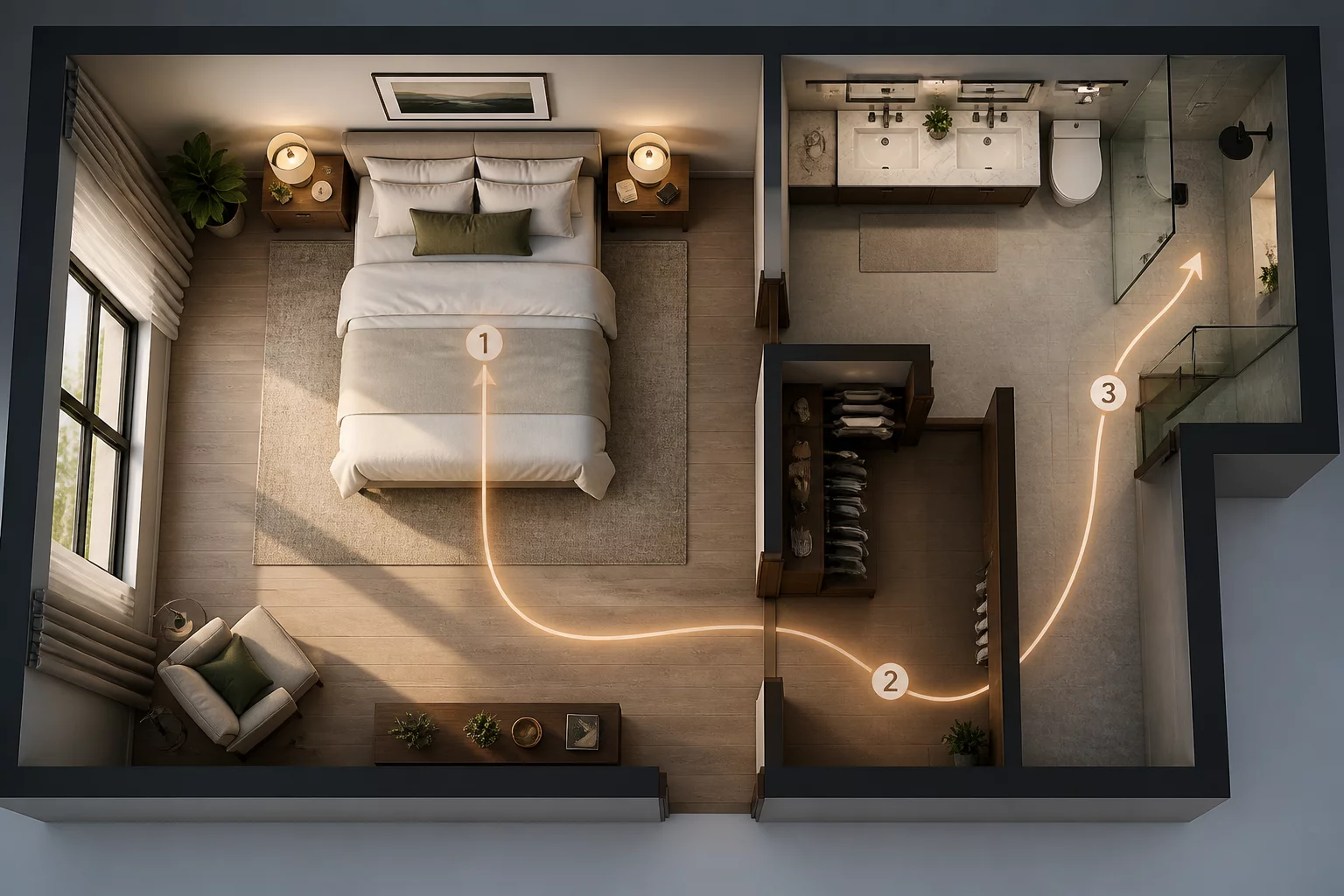
Daily routine impact is the cumulative effect that the physical layout of a living space has on the efficiency and psychological well-being of its occupants through the support or obstruction of recurring habits. When a floor plan aligns with the natural sequence of human activities, it reduces cognitive load and physical fatigue. Conversely, a mismatched layout creates "spatial friction," where inhabitants are forced to navigate counter-intuitive paths to complete simple tasks like preparing breakfast or winding down for sleep.
The Psychology of Micro-Movements
Every action we take at home involves a series of micro-movements. The distance between the coffee machine and the sink, the angle of the bathroom door relative to the bed, and the placement of light switches are not just construction details; they are behavioral cues. If a layout ignores these sequences, it forces the brain to solve a spatial problem every time a routine is performed. Over months and years, this leads to "layout fatigue," where parts of the home become associated with low-level stress rather than comfort.
Morning Flow and Spatial Efficiency
Consider the "Master Suite Loop." A well-designed routine-based layout ensures that the path from the bed to the bathroom, then to the dressing area, and finally to the exit is a continuous, non-intersecting line. When the wardrobe is located in a separate hallway or the bathroom door blocks the path to the clothes, the routine is broken. This creates behavioral bottlenecks—areas where multiple family members collide or where physical obstacles prevent a smooth transition from one state of readiness to the next.
Habit Stacking through Architecture
Architecture can serve as a catalyst for positive habits. By grouping related functions—such as a reading nook with integrated book storage and directed task lighting—the space itself encourages the behavior. Designers call this "affordance." A kitchen that places the trash pull-out directly under the primary chopping zone affords easy cleanup, thereby making the habit of cleaning-as-you-go effortless. The layout doesn't just house our lives; it actively shapes the version of ourselves that we become within its walls.
This could be your first comment. Share your spatial logic below.