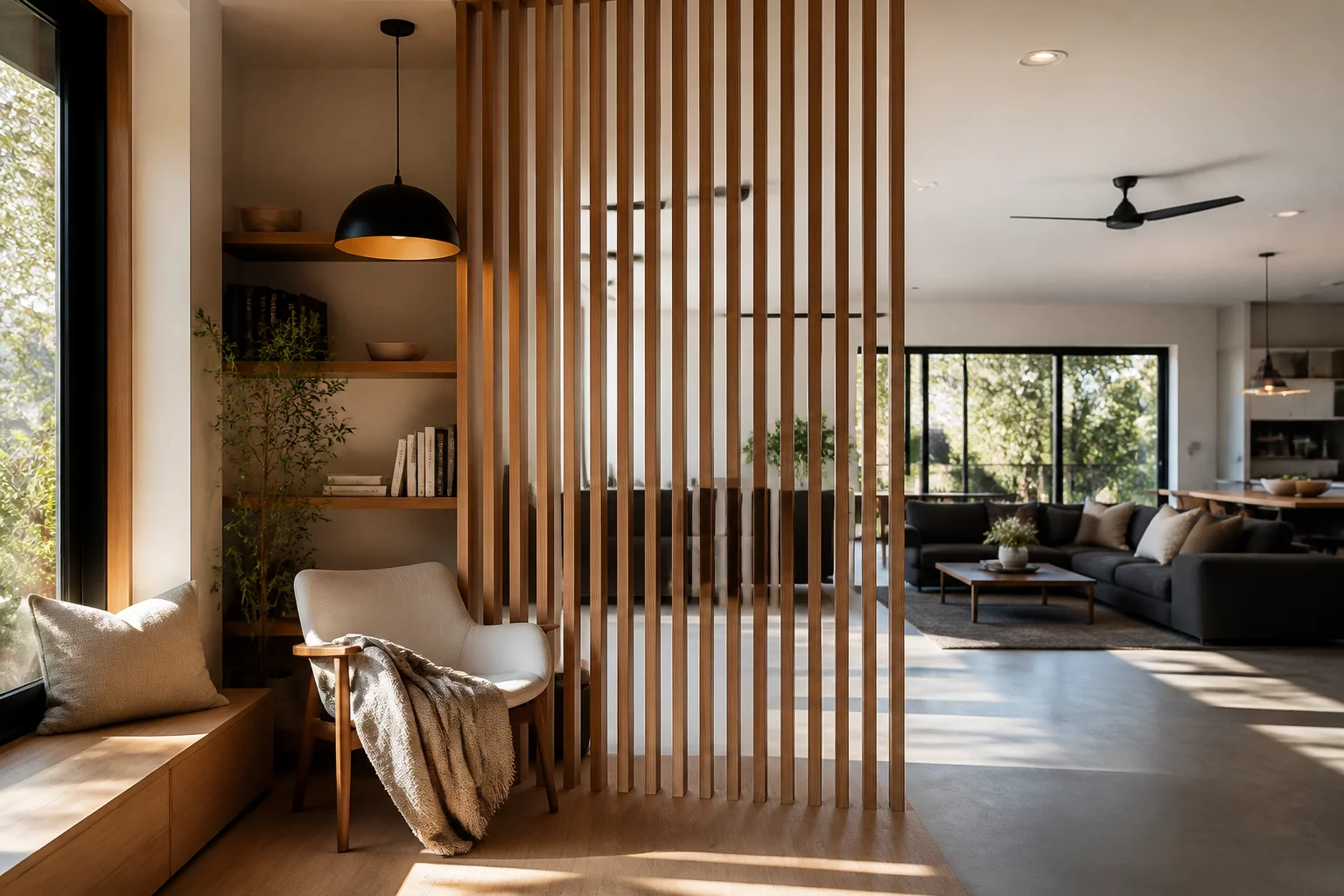
Successful residential planning rests on a delicate equilibrium between social interaction and individual retreat. While open-plan layouts have dominated modern design for decades, the psychological cost of constant exposure is becoming increasingly evident. Humans require "prospect and refuge"—the ability to see what is happening around them while feeling sheltered from intrusion.
The Paradox of Open Living
In many modern homes, the removal of walls has inadvertently removed the ability to regulate social boundaries. A child doing homework, a parent cooking, and another person watching TV all occupy the same acoustic and visual field. This leads to sensory overload, where the very space intended for relaxation becomes a source of underlying stress. The solution isn't necessarily to return to tiny, boxy rooms, but to implement intelligent zoning that allows for graduated levels of privacy.
Zoning for Psychological Health
We categorize these zones into communal, semi-private, and private. Communal areas facilitate connection, but they work best when they aren't the only option. Semi-private zones—nooks, alcoves, or glass-partitioned offices—allow a person to be part of the household energy without being fully immersed in its noise or direct visual path. True private zones, such as bedrooms and bathrooms, must remain acoustically isolated to serve as effective restorative retreats.
Ivan
Reader • 2026-06-18
Judy
Reader • 2026-06-19